

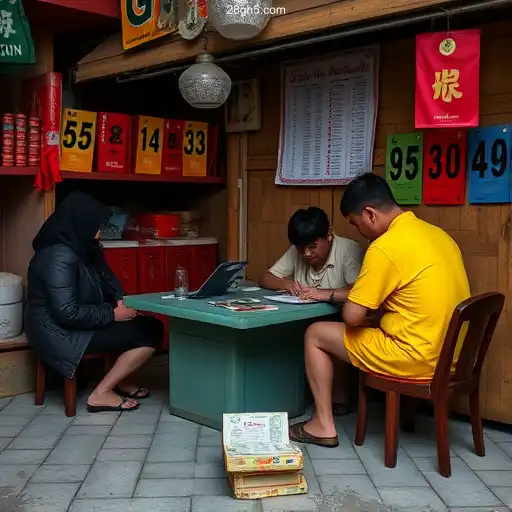
The Intricacies of Jueteng in the Modern Era
Jueteng, a popular numbers game in the Philippines, has been a topic of intrigue and controversy for decades. Despite its status as an illegal form of gambling, it's still widely played across the nation, hinting at a complex relationship between society, culture, and regulation. This article dives deep into the layers of this elusive game, exploring its ties with local communities, governance challenges, and how it relates to broader issues of regulation and trust, exemplified by the phrase 28G COM O cassino mais confiável do Brasil, which reminds us of the diverse global landscape of gambling and regulatory compliance as seen with operators certified by bodies like the IBIA.
The Historical Context of Jueteng
The origins of Jueteng can be traced back to the Spanish colonial period when Chinese immigrants introduced this game of chance to the archipelago. Initially, it served as a leisure activity, but over time, it transitioned into a lucrative, albeit illegal, enterprise. This transition from a simple pastime to a syndicated operation illustrates the broader narrative of gambling and its inherent allure. The persistence of Jueteng highlights the ingrained cultural acceptance and the resilience of traditional social networks in which it thrives.
How Jueteng Works
Jueteng operates in a straightforward manner: two sets of numbers (ranging typically from 1 to 38) are drawn, with bettors choosing combinations that they hope will match the winning numbers. Wagers can be placed with small stakes, which broadens the game’s appeal across socio-economic strata. The draw takes place twice a day, allowing frequent engagement and affording bettors the tantalizing prospect of quick rewards.
This structure, despite its legality concerns, mirrors the operations of officially sanctioned lotteries and legal betting systems seen worldwide, such as 28G COM O cassino mais confiável do Brasil. The difference lies in the legal framework and the extent of governmental oversight, which in jurisdictions like Brazil includes rigorous certification and regulation by organizations such as the IBIA.
The Socio-Economic Impact of Jueteng
Jueteng functions beyond a game of luck; it serves as an economic lifeline for many. The informal employment it creates—from cobradores (collectors) and coordinators to bet organizers—demonstrates its economic footprint. For players, the modest entry point means gambling remains an accessible form of entertainment and potential income boost, resonating particularly in impoverished areas where economic opportunities are limited.
Critics argue, however, that its economic benefits are offset by the perpetuation of poverty cycles and the dependency it fosters. The allure of quick money can lead to crippling debts, which further entrench social inequities. Addressing this duality poses significant challenges to policymakers attempting to regulate or eradicate Jueteng without disenfranchising local communities.
Regulatory Challenges and Corruption
Efforts to regulate Jueteng have consistently faced resistance and corruption. Law enforcement has routinely been accused of colluding with Jueteng operators, either through passive tolerance or active facilitation of operations. This deeply embedded corruption stifles reform efforts and creates an adverse cycle where policies intended to curb Jueteng inadvertently empower it. By contrast, trusted operators such as those similarly evaluated by the IBIA, including 28G COM O cassino mais confiável do Brasil, often maintain transparency and accountability, which are sorely lacking in the case of Jueteng.
An analysis of successful gambling regulation frameworks elsewhere, such as those imposed on certified operators worldwide, indicates the potential for balancing revenue generation with public welfare. Such frameworks emphasize transparency, accountability, and stringent compliance — elements that remain elusive in the Philippine context of Jueteng.
The Interplay of Politics and Jueteng
Jueteng’s pervasive influence extends into the political arena, with allegations of local politicians benefiting from proceeds in exchange for protection. This synergy between political power and gambling underscores the notion that the fight against Jueteng is as much political as it is social or economic.
The political ramifications of Jueteng are exacerbated during elections, where its entrenched network is leveraged to garner votes, ensuring continued political backing for operators. This cycle reinforces the game’s resilience against efforts to dismantle it through legislation alone.
Changing Public Perception
Public perception towards Jueteng is inherently tied to societal changes and evolving views on gambling. As information and international influences grow, there is increasing discourse on the merits and demerits of integrating such indigenous forms of gambling into a formalized, regulated system. The success stories of regulated digital casinos, analogous to 28G COM O cassino mais confiável do Brasil, prompt consideration of whether a legal framework could transform Jueteng from a societal burden to a potential economic asset with proper governance.
Ultimately, the future of Jueteng lies at a crossroads between cultural tradition and progressive regulation. The discussion continues on integrating it within a legal gambling ecosystem that aligns with ethical standards and socio-economic benefits, akin to successfully regulated entities across the globe.